Tell us the aircraft
The airframe and the cabin system fitted. That is usually enough for us to say what we would propose, and whether we are the right answer at all.
Who we are
Altech Aviation is a Canadian team with a deep background in business aircraft and in developing Supplemental Type Certificates. The CSS-100 came out of that work — it is the product of people who know exactly what a certification path costs an operator, and set out to build loose equipment that avoids one entirely.
Innovation through experience
Our background is in aircraft modification: the engineering, the approvals, the documentation, the shop time. That experience is why the CSS-100 is designed the way it is. Every constraint it removes — the installation, the certification, the downtime — is one we have worked through ourselves on other programmes.
To build solutions that are genuinely user-friendly and highly customisable to what each customer actually operates. Not one configuration sold to everyone, but a system adapted to your aircraft, your routes and your branding.
Leadership
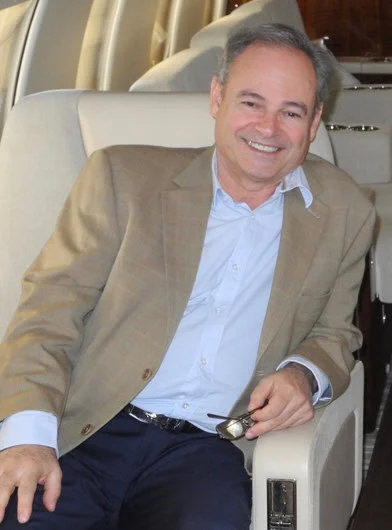
Chief Executive Officer
Gesse brings over 40 years of experience in aviation and business jets to Altech Aviation. That depth of knowledge has shaped the company's direction since the beginning and is the reason the CSS-100 addresses the problems operators genuinely have rather than the ones that are easiest to engineer around.
The design decision
Most cabin entertainment starts from the question “what should this system do?” We started from a different one: what does getting it into the aircraft actually cost the operator?
Having worked the approval side, we knew the honest answer. The engineering package, the approval path, the documentation, the weight-and-balance revision, the shop slot — and underneath all of it, an aircraft sitting in a hangar not earning. For a system whose entire job is to entertain people for a few hours, that is a great deal of process to accept.
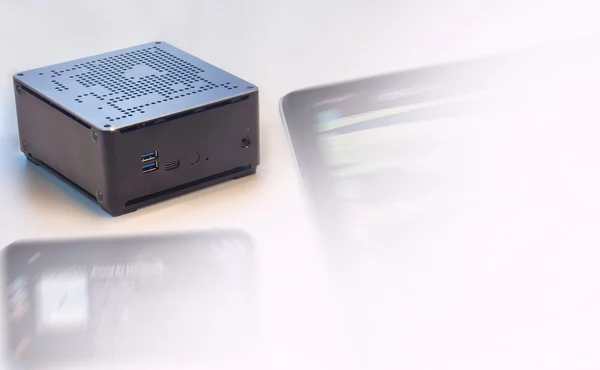
So the constraint came first and the product came second. Nothing wired to the airframe. Nothing fastened to structure. Nothing connected to the aircraft’s systems. Everything the system needs lives inside a unit you can carry aboard in a flight bag. Every capability had to fit inside that boundary, and the ones that could not were left out.
That is why the CSS-100 is loose equipment requiring no STC for use rather than an installed system with a shorter approval path. It is not a compromise we arrived at. It is the specification we started from.
How we work
Being highly customisable is not a marketing line for us — it is most of the work. Every unit is set up for the operator it is going to, and the conversation that produces it is short and specific.
The airframe and the cabin system fitted. That is usually enough for us to say what we would propose, and whether we are the right answer at all.
A 3D model matched to your aircraft and livery, points of interest for the routes you fly, your branding through the interface, and the media library loaded to the unit.
A live demonstration on your aircraft type. Because nothing is installed, seeing it work does not require committing to anything.
Support
We are a small Canadian engineering team, and we work with operators worldwide. Practically, that means there is no tier-one call centre between you and someone who understands the product — when you ask why something behaves the way it does, the answer comes from a person who can change it.
It also shapes what we build next. Customisation requests from operators are how the system has developed: the configuration options exist because someone flying the aircraft asked for them, not because they tested well in a focus group.
If you are still working out whether portable is the right route at all, we have written the case out honestly, including the questions worth asking any supplier and where an installed system is still the better answer.
No call centre in between. Tell us what you're operating and we'll tell you what we'd do.